Daily News Pulse, by Alex Warne on May 7, 2011, 6:26 am
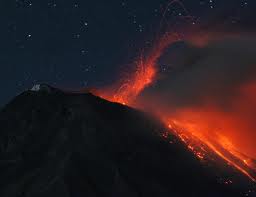
Thundering explosions could be heard miles from Tungurahua, which is on the Andes cordillera 84 miles (135 kilometers) southeast of Ecuador’s capital, Quito. A state Geophysics Institute scientist monitoring the volcano from a nearby observation post said by phone that incandescent boulders were landing up to 1.2 miles (2 kilometers) beneath crater level.
“The smallest blocks are that size of an automobile while the biggest reach the size of a truck, which cause impact craters up to 10 meters (33 feet) wide as they hit the flanks,” the scientist, Silvana Hidalgo, told The Associated Press.
Active Volcano
Tungurahua, one of the eight active volcanoes in the Andean nation, has been active since 1999. Though one of its strongest eruptions took place in 2008, it had already proved itself deadly, when at least four people were killed and thousands forced to evacuate during a series of eruptions, which took place in July and August of 2006.
A Lot Of Damage
“According to our observations, damages to crops, pastures and small effects to the health of people are already evident,” the country’s geophysics institute said. Officials first detected increased activity in the volcano April 20, with monitors observing regular small eruptions of ash and gas. The glacier-capped, 16,478-foot volcano has erupted periodically since 1999, when increased activity led to the temporary evacuation of the city of Banos at the foot of the volcano. Tungurahua erupted in December, sending ash and lava spewing nearly a mile into the sky. Major eruptions also occurred in August 2006 and February 2008, according to the government’s emergency management agency.
Orange Alert
“We have an orange alert in the area near the Tungurahua volcano,” said Maria Cornejo with the government’s risk assessment office. The villages of Cusua, Bilbao and Chacauco were asked to evacuate, she said. The volcano started experiencing increased activity on Wednesday. The government issued an alert Thursday for the provinces of Tungurahua and then Chimborazo and Pastaza.
No comments:
Post a Comment
Note: Only a member of this blog may post a comment.